Quick answer
To stop pipes freezing, disconnect garden hoses and shut off outdoor taps, insulate pipes in crawl spaces, garages and along outside walls, seal drafts, keep the heat at 13°C or higher even when you are away, and let a tap drip during deep cold snaps. Rural homes should also protect well lines and pressure tanks.
King City, Nobleton and the rest of King Township sit north of the city, with open fields, plenty of wind and colder nights than downtown Toronto. Many homes here are older farmhouses, have additions built over crawl spaces, or run on private wells and septic systems. All of that makes frozen pipes more likely. Here is how to prepare your home before the first deep freeze.
Why do pipes freeze more often in King City and Nobleton?
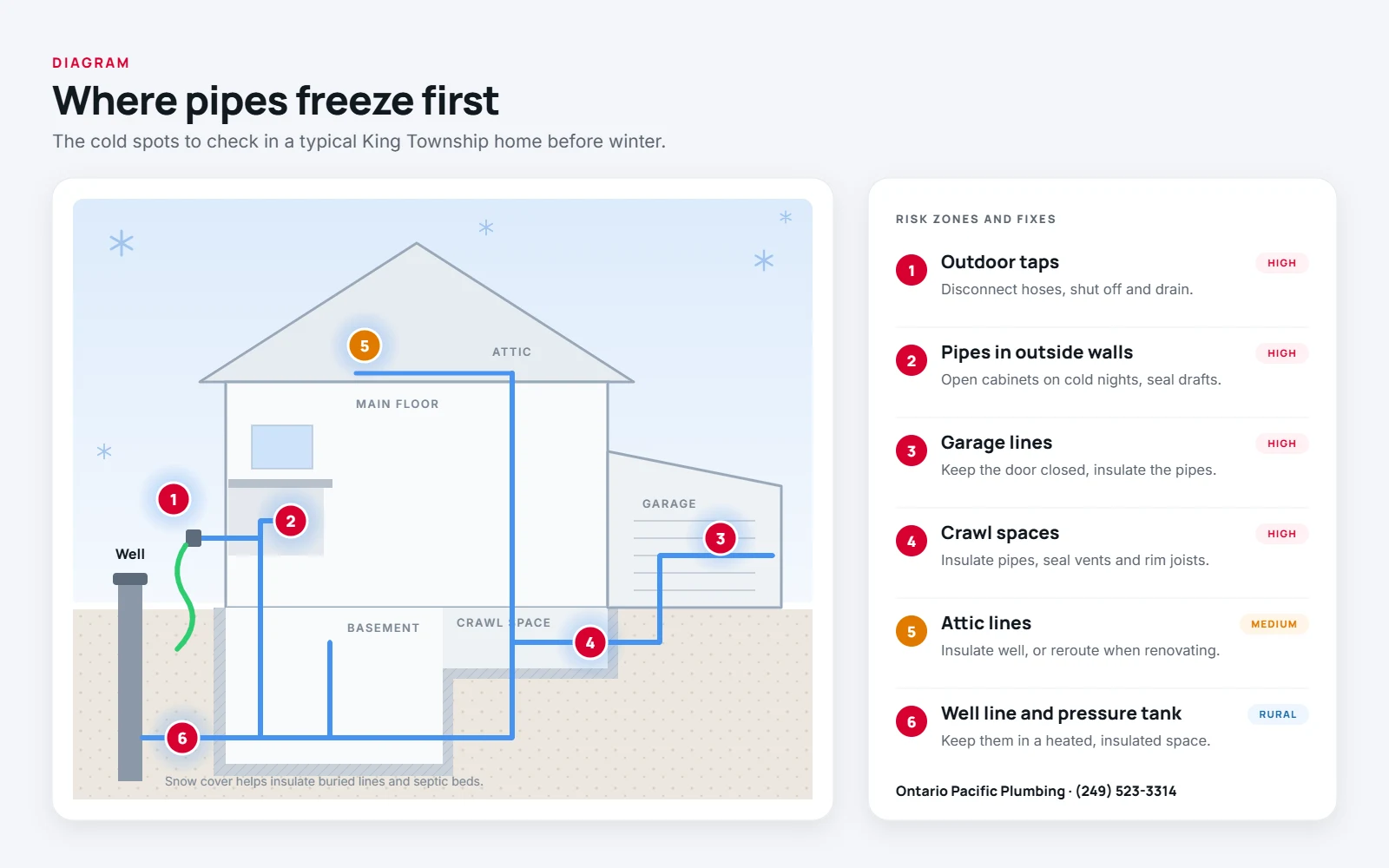
- Rural exposure. Houses surrounded by open land take the full force of the wind, which pulls heat out of exterior walls faster.
- Older construction. Farmhouses and older additions often have less insulation, drafty rim joists and plumbing in crawl spaces.
- Wells and pump houses. The line from the well, the pressure tank and any pump house or unheated utility area can freeze before the rest of the house.
- Garages and outside walls. Pipes that pass through a garage or sit in an outside wall, such as a kitchen sink line under a window, are the usual weak points.
- Empty homes. Cottages, rentals and homes left empty over the holidays can freeze if the heat drops or the furnace fails.
How do I winterize my home plumbing before the first freeze?
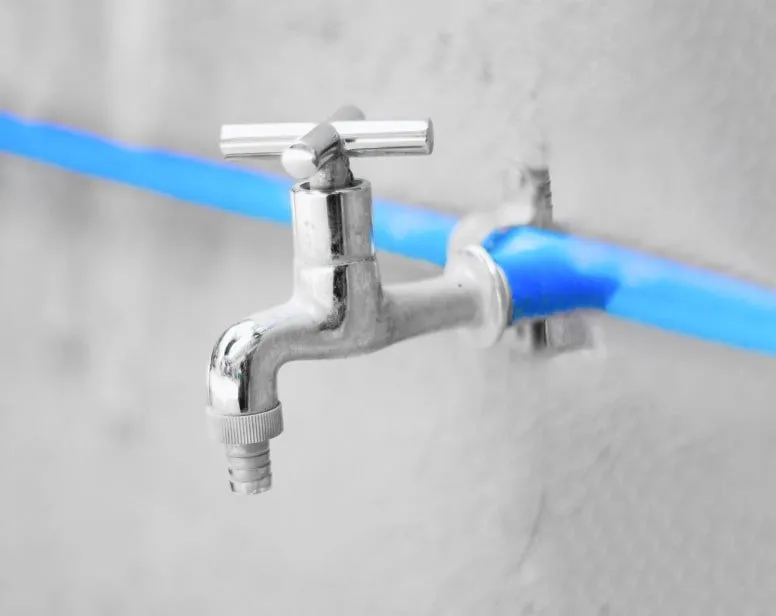
- Disconnect garden hoses. A hose left attached traps water in the outdoor tap and can split the pipe inside the wall, even on a frost-free tap.
- Shut off and drain outdoor taps. Close the indoor shut-off valve for each outdoor tap, then open the outdoor tap to let it drain. Leave it open for the winter.
- Insulate exposed pipes. Fit foam pipe sleeves on pipes in crawl spaces, unfinished basements, garages and attics. Pay extra attention to pipes near rim joists and outside walls.
- Seal drafts. Use caulk or spray foam around gaps where pipes, wires and vents pass through exterior walls, and around basement windows and rim joists.
- Use heat cable where needed. For a pipe that has frozen before, a certified self-regulating heat cable, installed to the manufacturer’s instructions, can help. Do not wrap cable over itself.
- Know where your main shut-off is. If a pipe does burst, closing the main quickly is what limits the damage. Read our burst pipe checklist so you know the steps.
How do I protect a well, pressure tank and septic system in winter?
Many homes around Nobleton, Schomberg and rural King Township rely on private wells and septic systems. These need some extra care in winter:
- Keep the pressure tank and well line in a heated space. If they sit in a pump house or crawl space, insulate it and consider a thermostatically controlled heater rated for that use.
- Check that the well cap is secure and that snow and ice are not building up around it.
- Leave snow on your septic field. It acts as insulation. Avoid driving, parking or packing down snow over the tank or field, which drives frost deeper.
- Use water normally. A septic system that sees steady, warm water is less likely to freeze than one that sits unused.
What temperature should I keep my house at to stop pipes freezing?
Keep the thermostat at 13°C or higher at all times, including overnight and while you are away. Turning the heat right down to save money is one of the most common reasons we get called out in January. On the coldest nights, also:
- Open the cabinet doors under sinks on outside walls so warm room air reaches the pipes.
- Keep the garage door closed if there are water lines in the garage.
- Let a cold tap drip slowly at the sink furthest from where the water enters the house. Moving water is much harder to freeze, and a dripping tap relieves the pressure that causes splits.
Going away this winter?
- Keep the heat on at 13°C or higher.
- Ask someone to check the house every day, and make sure they know where the main shut-off is.
- For longer trips, or a cottage you are closing, shut off the main water, open the taps to drain the lines, and switch off the water heater. A plumber can fully drain and winterize the system for you.
- Consider a smart thermostat or a low-temperature alarm that sends you an alert if the heat fails.
How can I tell if a pipe is already frozen?
- Little or no water comes out when you open a tap, while other taps work.
- Frost on an exposed pipe, or a pipe that bulges.
- A toilet that does not refill after flushing.
- Strange smells from drains, which can mean a frozen drain line is backing up.
If you think a pipe is frozen, leave the tap open, turn off the water to that line if you can, and warm the pipe slowly with a hair dryer or warm towels, starting from the tap end. Never use an open flame. Our page on what to do when pipes freeze has the full steps.
When to call a plumber
- You cannot find the frozen section or it is inside a wall or ceiling.
- Several taps or the whole house has no water.
- You see cracks, bulges or any leaking once the pipe starts to thaw.
- Your well line, pressure tank or main supply line has frozen.
Ontario Pacific Plumbing thaws frozen pipes and repairs burst pipes 24/7 across King City, Nobleton and York Region: (249) 523-3314. See our frozen and burst pipe repair service or our work as a plumber in King City.
Frequently asked questions
At what temperature do pipes freeze?
Water freezes at 0°C, but pipes inside a heated home are usually at risk once outdoor temperatures stay around -7°C or colder for several hours. Pipes in crawl spaces, garages and outside walls freeze first, especially when it is windy.
Should I leave my taps dripping overnight?
During deep cold snaps, yes. Let a cold tap on an outside wall drip slowly overnight. Moving water is harder to freeze and a dripping tap relieves pressure in the pipe, which lowers the chance of it splitting.
Do frost-free outdoor taps still freeze?
They can. A frost-free tap only works if it can drain. If a garden hose is left attached, water stays trapped inside and can freeze and split the pipe in the wall. Disconnect hoses every fall.
What should I set my thermostat to when I am away in winter?
Keep it at 13°C or higher, and have someone check the house daily. For longer absences, shut off the main water and drain the lines, or ask a plumber to winterize the system.